


Industry
Arts & Culture
Location
London, UK
Model
Rapid R&D pilot
Scope
Large gallery area
The Challenge
Visitors are increasingly turning up to the Gallery and using generalist AI to answer their questions. Those responses are being pulled from the internet at large and so may or may not be accurate - and definitely do not have the authority of the Gallery's curatorial knowledge behind them. The current alternative - audio guides - rely on pre-recorded, non-responsive content, so visitors who want to ask follow-up questions, go off-route or dig deeper into a specific subject have nowhere to take that curiosity.
The Solution
The National Gallery partnered with Dwel to pilot “The Voice of the Gallery” - a conversational companion that let visitors speak directly to the Gallery itself about the paintings, the building and their surroundings, with every response grounded in the Gallery's own curatorial knowledge.
Run as an R&D pilot encompassing a large area within the Gallery, the project was an exploration into what having a voice of their own might mean, both for them as a centuries-old cultural institution, and for the people who visit them.

The Results
Over the course of the pilot, visitors consistently chose to keep talking - and told us, overwhelmingly, that they'd want The Voice of the Gallery to stay.
71%
Of testing sessions went past 5 conversation turns
31.6
Average turns per session for those who kept going
120
Turns from one tester in a single 30-minute session
They Didn't Want to Stop
When testers engaged, they really engaged: of the 71% of sessions that went past 5 turns, the average length was 31.6; one tester racked up 120 turns over 30 minutes while moving naturally from one painting to the next across multiple rooms. Visitors followed their own curiosity rather than a set route, with the Voice of the Gallery providing a genuine expert companion that accompanied them wherever they wanted to go rather than just leading the way.
AI You Can Trust
Testers instantly saw the Voice of the Gallery as a trusted source and fundamentally different to asking Gemini or ChatGPT the same questions, dismissing this as “just talking to AI”. They held their AI conversation to the same high standard they would hold a Gallery curator, expecting responses to be entirely accurate at all times, and were very satisfied when they learned the AI did indeed rely solely on Gallery knowledge for its answers. One visitor was glad it wasn't “picking up opinions from Google and Reddit.”
No Silly Questions
Many testers - especially those with less experience of being in cultural spaces - reported that they are often reluctant to ask questions they think might expose their lack of knowledge or make them sound naive, yet felt very comfortable asking those same questions to the Gallery's AI. Freed of that self-consciousness, visitors leaned further in rather than holding back, often going deeper into a painting or a story than a guided tour would typically allow. As one tester put it, the experience was “really good for people who aren't very confident... and do have questions but want to be able to ask them without feeling embarrassed.”
A Voice for All
Some of the pilot's most striking moments came from the ease and speed with which the majority of testers mastered the “hold-and-speak” interface - including older demographics that are traditionally least likely to engage with new technology. Some were initially wary of the AI but were typically holding fluent, natural conversations within minutes, often becoming the most enthusiastic participants in the room by the time they left. As one older tester said, “the only problem is that you'd never get me to leave!”
Speaks Your Language
The Voice of the Gallery's reach went well beyond English. Testers held extended conversations in French, German, Spanish and Italian, several remarking on how naturally it handled their own language rather than defaulting back to English - a small detail that matters enormously to visitors more used to being translated at than spoken to directly by a cultural institution.

“The only problem is that you'd never get me to leave!”

In Visitors' Own Words
“I normally go to galleries with a group of people but now I can actually go in on my own because I feel like I'm not alone. I've got someone there that I can speak to.”
“I just literally work across the road from here, and I'm more likely to come here on my lunch breaks if I have a companion like that.”
“It's a great idea, a very good idea. Because it brings accessibility to people who aren't dedicated to art.”
“I love it, we're big fans of the AI. To use it in a museum brings more of an insight if you're not into art.”
“It was fun, interesting and educational. It increased our interest in the paintings and the gallery.”

Looking Ahead
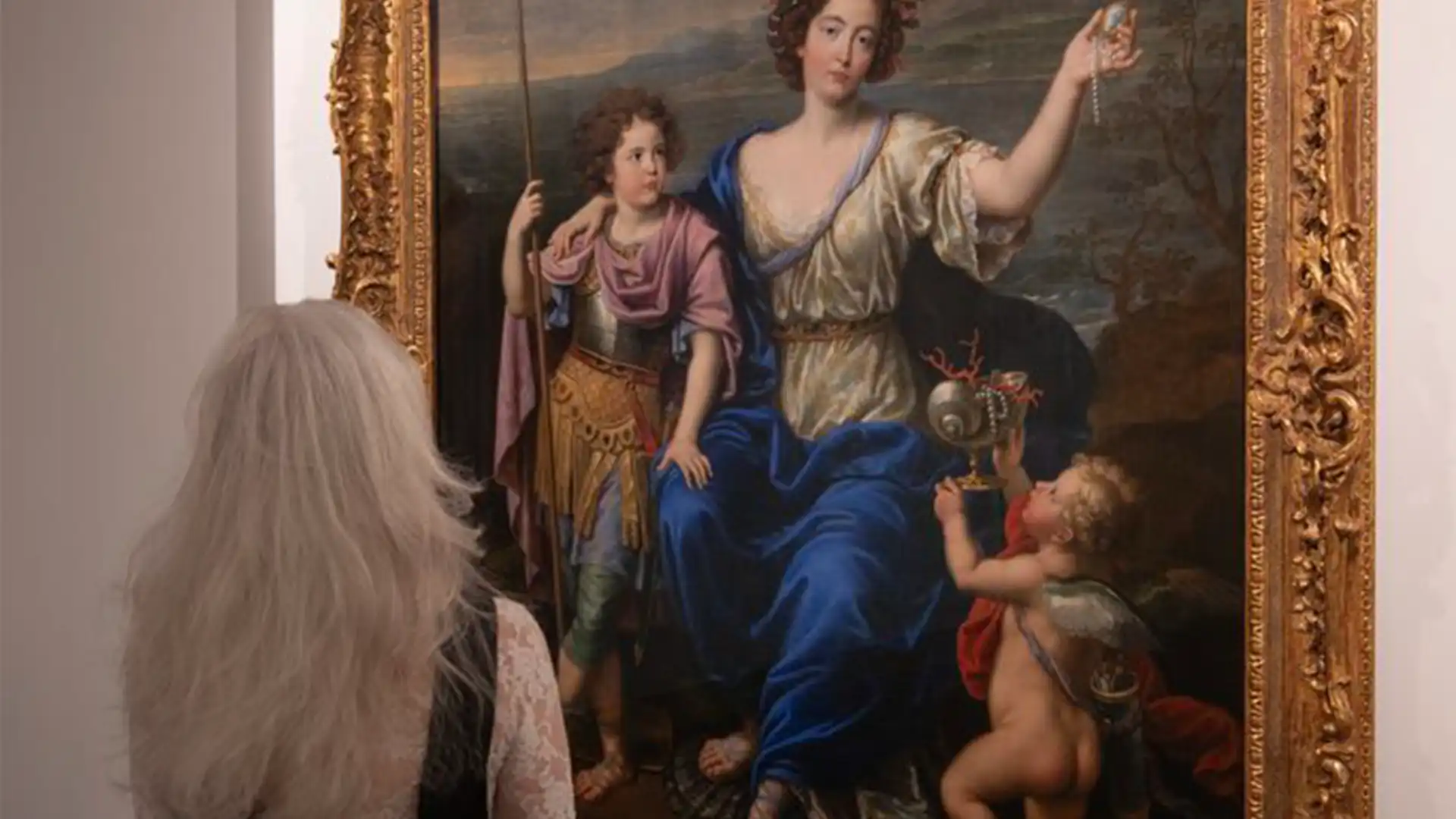
The pilot's reception has already led to an extension: as part of the Masterpiece Tour: Mignard (2026-2027), Dwel is working with partner venues, including South Shields Museum & Art Gallery, to bring a version of the experience to visitors elsewhere while ‘The Marquise de Seignelay’ is on display.
“There's nowhere more humbling to prove what Dwel can do than the National Gallery. Watching visitors lean in closer to a painting, ask another question, then another, because a piece of the national collection has genuinely come alive for them - that's the moment this technology is built for.”

More Case Studies
Want to see what Dwel could do for your place?